
Philip Austin: The Voice That Turned Radio Comedy Inside Out
The Life of Philip Austin: From Nick Danger to The Firesign Theatre and His Lasting Legacy in American Comedy

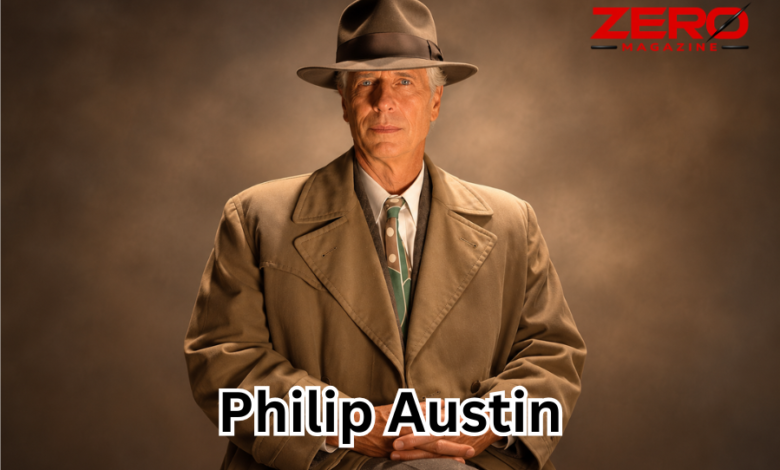
Philip Austin did not need a television screen to create an unforgettable character. As Nick Danger, a detective whose adventures borrowed the atmosphere of vintage crime dramas and then dismantled their logic, he gave listeners a voice they could recognise inside a deliberately bewildering world. Born Philip Baine Austin in 1941, the American comedian, writer, musician and actor became a founding member of The Firesign Theatre, a group that transformed radio conventions into surreal comedy.
Its best recordings rewarded attention and repeated listening. Austin’s achievement was not simply making people laugh; it was helping demonstrate how an entire fictional universe could be constructed, distorted and made funny through sound.
Quick Bio
| Detail | Information |
|---|---|
| Full Name | Philip Baine Austin |
| Known As | Phil Austin |
| Date of Birth | April 6, 1941 |
| Place of Birth | Denver, Colorado, USA |
| Date of Death | June 18, 2015 |
| Age at Death | 74 years |
| Nationality | American |
| Profession | Comedian, Actor, Writer, Musician |
| Famous For | Founding member of The Firesign Theatre |
| Notable Character | Nick Danger |
| Education | Bowdoin College, UCLA |
| Famous Solo Album | Roller Maidens from Outer Space (1974) |
| Spouse | Oona Austin |
| Place of Death | Fox Island, Washington, USA |
A Childhood Far from Hollywood, and an Education Without a Degree
Austin was born on 6 April 1941 in Denver, Colorado, and grew up largely in Fresno, California. His mother taught drama, an early connection to performance that fellow Firesign member Philip Proctor later identified as important to his acting background.
A talented swimmer, he received a scholarship to Bowdoin College in Maine. He also attended Fresno State and the University of California, Los Angeles, although the group’s official biography indicates that he did not graduate. According to an AllMusic biography, he performed in college productions, wrote for student publications and hosted a campus radio programme.
By the early 1960s, Los Angeles had become his professional base. He worked among the early apprentices of the Center Theatre Group and appeared in stage productions. That theatrical discipline helped give even his strangest characters the conviction of ordinary, believable people.
Four Voices Meet in the Experimental World of KPFK
The turning point came at Los Angeles station KPFK. There, Austin encountered Peter Bergman, David Ossman and Philip Proctor, the three collaborators with whom he would form The Firesign Theatre.
In 1966, they appeared together on Bergman’s programme Radio Free Oz. One early broadcast presented an imaginary film festival so plausibly that some callers reportedly responded as though its films existed.
They imitated the sound of familiar institutions—film commentary, news, advertisements and radio entertainment—until the imitation created an absurd reality of its own. This was satire of the medium as much as the messages travelling through it.
The debut album, Waiting for the Electrician or Someone Like Him, arrived in 1968. It was followed by How Can You Be in Two Places at Once When You’re Not Anywhere At All in 1969. They invited audiences to enter situations that changed without warning, with voices and effects carrying as much meaning as the words.
Philip Austin and the Unlikely Immortality of Nick Danger
Nick Danger became Austin’s defining character, making his first appearance on the second side of the group’s 1969 album. The sketch was called The Further Adventures of Nick Danger, a knowingly ridiculous title for a character listeners were meeting for the first time.
Danger resembled the hard-boiled private eyes of American detective fiction, complete with dramatic narration and a confidence the material continually undermined.
Austin drew inspiration from the traditions associated with Dashiell Hammett’s Sam Spade and Raymond Chandler’s Philip Marlowe. Yet Nick Danger was never merely an impersonation. Austin supplied the sincerity of a detective in a universe where even the clues could become verbal traps.
Other characters demonstrated his range. Austin also voiced Bebop Loco, a disc jockey whose presence expanded Firesign’s imaginary media landscape, and played a part in Everything You Know Is Wrong, the 1974 album featuring the extraordinary claims of Happy Harry Cox.
His performances helped make different broadcasts, personalities and invented worlds feel as though they belonged to the same chaotic cultural universe.
The Records That Made Listeners Work for the Laughter
The Firesign Theatre reached beyond parody because its albums were designed like immersive dramas. Don’t Crush That Dwarf, Hand Me the Pliers (1970) blended overlapping narratives, fictional media and an extraordinary range of sound effects.
I Think We’re All Bozos on This Bus (1971) continued the group’s appetite for ambitious, densely constructed scenarios.
The timing was significant. Multitrack recording allowed the performers to layer voices, music, locations and interruptions with a precision that earlier live broadcasts could not easily match.
An advertisement might intrude on a story, or a seemingly minor phrase might acquire new meaning much later. The listener was not simply hearing comedy but decoding the relationship between competing pieces of audio.
Their cultural references were steeped in American radio, cinema, politics and consumer life, but the underlying technique remains accessible: take the sounds people instinctively trust, then reveal how easily those sounds can manufacture authority.
Recognition eventually extended beyond devoted fans. In 2005, the Library of Congress selected Don’t Crush That Dwarf, Hand Me the Pliers for the National Recording Registry, recognising its technical imagination and cultural importance. It recognised comedy worth examining as sound art, not simply remembering as a period novelty.
A Solo Record That Refused to Behave Like One
Austin also pursued ideas outside the quartet. His 1974 solo album, Roller Maidens from Outer Space, combined musical performances with science fiction, detective conventions, television satire and eccentric storytelling.
Although released under his name, the record involved fellow Firesign performers, illustrating how closely their creative circles overlapped.
The album revealed a musician as well as a voice actor. Guitar and songs were part of his toolkit, and the group’s official biography identifies him as its lead guitarist.
Rather than separating music from spoken comedy, he could use a song to complicate a scene or establish an unexpected shift in mood.
Austin’s activities also included commercial voice-over work. Credits reported by the group’s biography and contemporary obituaries include campaigns for Apple, Pizza Hut, Nissan and Nike.
Writing Beyond the Microphone
One of Austin’s later projects was Tales of the Old Detective and Other Big Fat Lies, a collection of humorous stories associated with an audiobook recording released in 1995.
Its fictional detective territory echoed the noir interests that had shaped Nick Danger, but allowed him to explore the form through prose and narration rather than an ensemble sketch.
He also worked on screenwriting and television development. The Firesign Theatre’s official biography records a screenplay project titled The Dead Sell Out, connected with the Grateful Dead, alongside development work on television comedies.
Such projects should not be confused with confirmed screen releases; they demonstrate activity across different formats rather than a catalogue of completed films.
His strongest material emerged from the interplay of writing, music, production and performance.
Later Reunions, Loss and a Documented Legacy
The original group’s prominence declined after its early-1970s peak, but its story did not end there. Recordings and reunions followed, including a 1990s revival and the albums Give Me Immortality or Give Me Death (1998), Boom Dot Bust (1999) and Bride of Firesign (2001).
The group continued appearing together into the following decade.
Peter Bergman died in 2012. Philip Austin died on 18 June 2015 at his home on Fox Island, Washington, aged 74.
Accounts of his precise medical cause of death differ: the troupe’s website refers to multiple cancers, a contemporary Los Angeles Times report cites cardiac arrest following cancer, and AllMusic describes an aneurysm. The consistent, well-supported facts are the date, place and age.
His wife, Oona, and sister, Cathy Andreasen, were identified as survivors in contemporary reporting.
In 2018, the Library of Congress acquired the Firesign Theatre archive, including scripts, recordings, correspondence and production materials. Its holdings make the group’s intricate working methods available for serious historical study.
For Austin, that preservation may be particularly fitting: his art was designed for the ear, but its invention also survives on the page and in the studio records behind the performances.
Why His Voice Still Matters
Philip Austin belonged to an era when recorded comedy could ask audiences to imagine the setting, question the narrator and discover the joke for themselves. His best-known detective remains an inviting way into that world, but Nick Danger was only one part of a larger achievement.
Through collective experimentation, Austin helped turn the limitations of an invisible stage into creative freedom. The surviving albums remind us that comedy need not explain everything immediately. Sometimes the greatest pleasure comes from hearing the familiar become strange—and listening again to find out why.
Frequently Asked Questions
Who was Philip Austin?
Philip Baine Austin was an American comedian, writer, musician and actor, best known as a founding member of The Firesign Theatre and the voice of Nick Danger.
When was he born?
He was born on 6 April 1941 in Denver, Colorado, and grew up primarily in Fresno, California.
What was Nick Danger?
Nick Danger was Austin’s comic private detective, a parody of classic radio mysteries and hard-boiled crime fiction, introduced on a Firesign Theatre album in 1969.
Did he release a solo album?
Yes. His 1974 album Roller Maidens from Outer Space combined musical comedy, radio-style drama and absurdist storytelling.
Did The Firesign Theatre win a Grammy?
The group earned Grammy nominations, but the official group history does not document a Grammy win. Its 1970 album Don’t Crush That Dwarf, Hand Me the Pliers entered the National Recording Registry in 2005.
When did Philip Austin die?
He died on 18 June 2015 on Fox Island, Washington, aged 74. Published sources give differing medical explanations for his death.
